Voice API automation is revolutionizing VoIP reseller operations by eliminating manual processes and enabling unprecedented developer innovation.
-
Automated provisioning and configuration reduce deployment time from hours to minutes while minimizing human error
-
Real-time integration capabilities connect voice services with business tools, creating seamless workflow automation
-
Developer-centric platforms provide REST APIs and SDKs that enable custom solutions beyond basic connectivity
-
Modern automation architectures scale effortlessly while maintaining security and reliability standards
The future belongs to VoIP providers who embrace API-driven automation to deliver superior customer experiences and operational efficiency.
Manual processes and legacy approaches can no longer meet the demands of modern business communication. Voice API automation and VoIP technologies are converging to create opportunities for unprecedented efficiency and innovation in reseller operations.
The shift toward API-driven telecommunications is a fundamental reimagining of how voice services are delivered, managed, and scaled. According to IDC research, worldwide revenues for telecom and network APIs will reach $6.7 billion in 2028, representing a compound annual growth rate of 57.1%. For VoIP resellers, this transformation means the difference between competing on price alone versus delivering differentiated, automated solutions that create lasting customer value.
Modern voice API automation empowers developers and service providers to build sophisticated communication ecosystems that respond dynamically to business needs. Advanced VoIP API developer tools now provide comprehensive SDKs, REST APIs, and integration frameworks that enable reseller automation at unprecedented scale. Rather than relying on static configurations and manual interventions, today's leading platforms enable real-time provisioning, intelligent call routing, and seamless integrations that transform how businesses communicate.
What Makes Voice API Automation Different in 2025?
Voice API automation in 2025 has evolved beyond simple REST endpoints and basic call management. Today's platforms provide comprehensive automation frameworks that address the entire telecommunications service lifecycle.

The fundamental difference lies in the architectural approach. Traditional VoIP systems required extensive manual configuration and ongoing maintenance. Modern voice API automation platforms treat every aspect of service delivery as programmable infrastructure, enabling resellers to deploy, scale, and modify services through code rather than manual intervention.
Contemporary voice APIs support event-driven architectures that respond to real-time conditions. When a customer needs additional capacity, the system automatically provisions resources. When call quality issues arise, intelligent routing algorithms instantly adjust traffic patterns.
Modern VoIP API developer tools have evolved to support sophisticated reseller automation workflows. Developers can create custom provisioning sequences, automated billing integrations, and intelligent monitoring systems that operate without manual oversight.
Advanced workflow automation platforms now integrate voice services as first-class citizens in business processes. This integration enables sophisticated scenarios where voice communications trigger automated workflows, customer interactions update CRM records in real time, and business rules dynamically modify call routing based on contextual information.
Security and compliance have also evolved. Modern voice API automation includes built-in compliance frameworks that automatically handle regulations like STIR/SHAKEN, TCPA, and international calling restrictions. Automated compliance reduces legal risks while ensuring consistent adherence to regulatory requirements.
Which Core Automation Capabilities Drive Reseller Success?
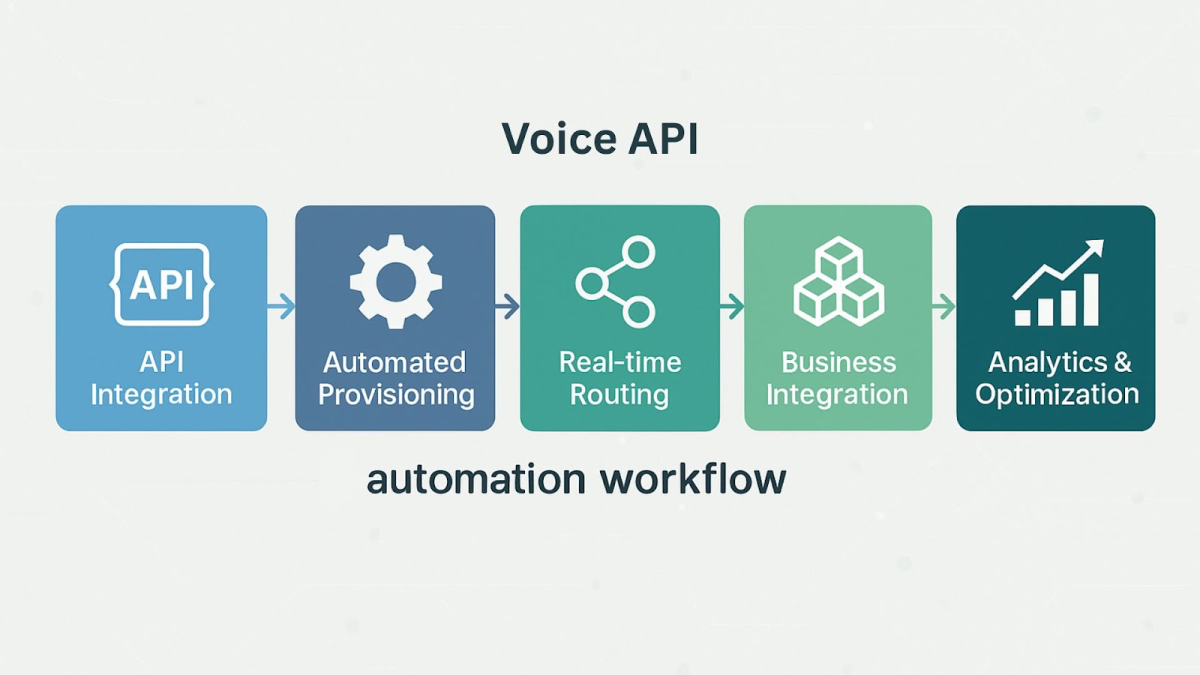
Automated Provisioning and Configuration
Modern voice API automation transforms the traditionally time-intensive process of service deployment into instantaneous, error-free operations. Sophisticated provisioning systems can configure complete customer environments in minutes rather than hours or days.
These systems handle complex scenarios like multi-location deployments, custom call routing requirements, and integration with existing business tools. Automation includes advanced features like call center configurations, disaster recovery planning, and performance monitoring setup.
Sophisticated VoIP API developer tools enable resellers to implement zero-touch provisioning workflows that automatically configure complete customer environments based on predefined templates and business rules. This level of reseller automation reduces human error while accelerating time-to-market for new services.
Real-Time Call Management and Routing
Intelligent call management represents one of the most impactful applications of voice API automation. Modern systems use real-time analytics to optimize call routing based on agent availability, customer priority, historical interaction data, and business rules.
Automated intelligence extends to capacity management, automatically scaling resources during peak periods and optimizing costs during low-usage times. The system continuously monitors call quality metrics and automatically adjusts routing patterns to maintain optimal performance.
Integration Orchestration
The power of voice API automation multiplies when integrated with broader business systems. Modern platforms coordinate voice services with CRM systems, business applications, and workflow automation tools.
These integrations enable scenarios where customer calls automatically trigger personalized workflows, business events modify call routing parameters, and voice interactions generate real-time analytics that inform business decisions. Automated billing systems integration ensures seamless revenue management while reducing administrative overhead.
How Are Developers Driving Innovation Beyond Basic Connectivity?
Modern voice APIs have evolved beyond simple call management to enable sophisticated automation frameworks that transform entire business operations.
5 Innovative Use Cases Transforming VoIP Businesses
1. AI-Powered Customer Journey Automation: Modern voice APIs enable sophisticated customer journey automation that combines voice interactions with AI-driven decision making. These systems analyze conversation context, customer history, and business rules to automatically route calls, trigger follow-up actions, and personalize interactions.
2. Dynamic Resource Allocation Based on Usage Patterns: Intelligent resource management systems use voice API data to predict usage patterns and automatically adjust capacity allocation. These systems learn from historical data, seasonal trends, and external factors to optimize resource utilization while maintaining service quality.
3. Automated Compliance and Quality Monitoring: Voice API automation enables real-time compliance monitoring that enforces regulatory requirements and quality standards. These systems can detect compliance violations, automatically adjust call handling procedures, and generate comprehensive audit trails.
4. Predictive Maintenance and Issue Resolution: Advanced monitoring systems use voice API data to predict potential service issues and automatically implement preventive measures. These systems analyze call quality metrics, network performance data, and usage patterns to identify emerging problems before they impact customers.
5. Contextual Business Process Integration: Voice services become integral parts of broader business processes through sophisticated API integration. Customer calls can automatically trigger complex workflows, update multiple business systems, and generate actionable insights. This integration depth enables voice communications to drive business outcomes rather than simply facilitating conversations.

What Real-World Automation Patterns Drive Integration Success?
The most successful VoIP resellers in 2025 have moved beyond simple API integrations to implement comprehensive automation patterns that transform their operational efficiency and customer experience delivery.
Customer relationship management represents one of the most impactful automation patterns. When properly implemented, these integrations enable automatic customer identification, real-time access to interaction history, and intelligent call routing based on customer value and preferences. Integration capabilities with popular platforms ensure seamless data flow between voice systems and business applications.
Comprehensive reseller platforms have enabled automation patterns that were previously impossible with disparate systems. These platforms provide unified APIs that coordinate voice services, billing operations, customer management, and support functions through single automation workflows.
Financial system integration ensures accurate revenue recognition and streamlined billing operations. Automated usage tracking, pricing calculations, and invoice generation reduce administrative overhead while improving financial accuracy. These integrations become particularly valuable for resellers managing complex pricing structures or multiple service offerings.
How Do You Build Scalable Automation Architectures?
Successful voice API automation requires careful attention to architectural principles that ensure scalability, maintainability, and reliability. The foundation of effective automation lies in well-designed APIs that provide consistent interfaces while accommodating diverse business requirements.
Design Principles for Long-Term Success
Event-driven architecture patterns enable responsive automation that reacts to changing conditions. These patterns ensure that automation systems can handle unpredictable scenarios while maintaining performance and reliability standards. The architecture must support both synchronous operations for immediate responses and asynchronous processing for complex workflows.
Security and Compliance Considerations
The distributed nature of modern automation systems requires comprehensive monitoring and alerting capabilities. These systems must automatically detect and respond to security threats, performance degradation, and service failures. Geo-redundant network infrastructure ensures continued operation even during significant infrastructure failures.
Data protection and privacy compliance become more complex in automated environments where customer information flows through multiple systems. Automation frameworks must include built-in privacy controls and data governance capabilities that ensure regulatory compliance without manual intervention.
What Does the Future Hold for Voice API Innovation?
The trajectory of voice API innovation points toward increasingly sophisticated automation capabilities that blur the lines between voice communications and artificial intelligence. Machine learning algorithms are beginning to optimize call routing, predict customer needs, and automate complex business processes based on voice interaction patterns.
The integration of voice APIs with emerging technologies like augmented reality, IoT devices, and blockchain systems opens new possibilities for innovative communication solutions. These integrations will enable voice services to participate in broader digital transformation initiatives while maintaining the reliability and performance standards that businesses require.
The democratization of voice API development through low-code and no-code platforms will enable broader adoption of automation capabilities. Advanced VoIP API developer tools will increasingly empower business users to build their own reseller automation solutions without requiring extensive technical expertise.
Frequently Asked Questions
What are the primary benefits of voice API automation for VoIP resellers?
Voice API automation provides VoIP resellers with reduced operational costs, faster service deployment, improved customer satisfaction, and the ability to offer more sophisticated services. Automated provisioning reduces deployment time from hours to minutes, while intelligent routing and monitoring capabilities improve service quality and reliability.
How does voice API automation improve customer experience?
Voice API automation enhances customer experience through faster service activation, more reliable performance, personalized call routing, and seamless integration with business applications. Customers benefit from reduced wait times, fewer service interruptions, and communication systems that automatically adapt to their specific business needs.
What security considerations are important for voice API automation?
Voice API automation in VoIP requires robust authentication and authorization frameworks, comprehensive audit trails, encrypted data transmission, and automated compliance monitoring. Security architectures must protect against unauthorized access while enabling the real-time responsiveness that automation systems require.
How can resellers get started with voice API automation?
Resellers should begin by evaluating their current manual processes and identifying automation opportunities with the highest impact. Partner with voice API providers that offer comprehensive automation capabilities, developer-friendly documentation, and strong support resources. Start with simple automation scenarios and gradually expand to more complex workflows as expertise develops.
What integration capabilities should resellers look for in voice API platforms?
Look for platforms that provide REST APIs, comprehensive SDKs, pre-built connectors for popular business applications, webhook support for real-time event handling, and flexible data transformation capabilities. White-label platforms with extensive integration capabilities enable resellers to create customized solutions while maintaining their brand identity.
Enable Automation and Innovation Through a White-Label Partnership
Organizations that embrace voice API automation and VoIP will build sustainable competitive advantages through operational efficiency, superior customer experiences, and innovative service offerings that differentiate them.
The convergence of voice APIs, automation frameworks, and integration platforms creates unprecedented opportunities for resellers to deliver value beyond traditional voice services. Success requires a strategic commitment to automation-driven business models that prioritize scalability, reliability, and continuous innovation.
With geo-redundant infrastructure, extensive integration options, and developer-friendly APIs, SkySwitch enables resellers to build sophisticated automation solutions while maintaining their brand identity and customer relationships.